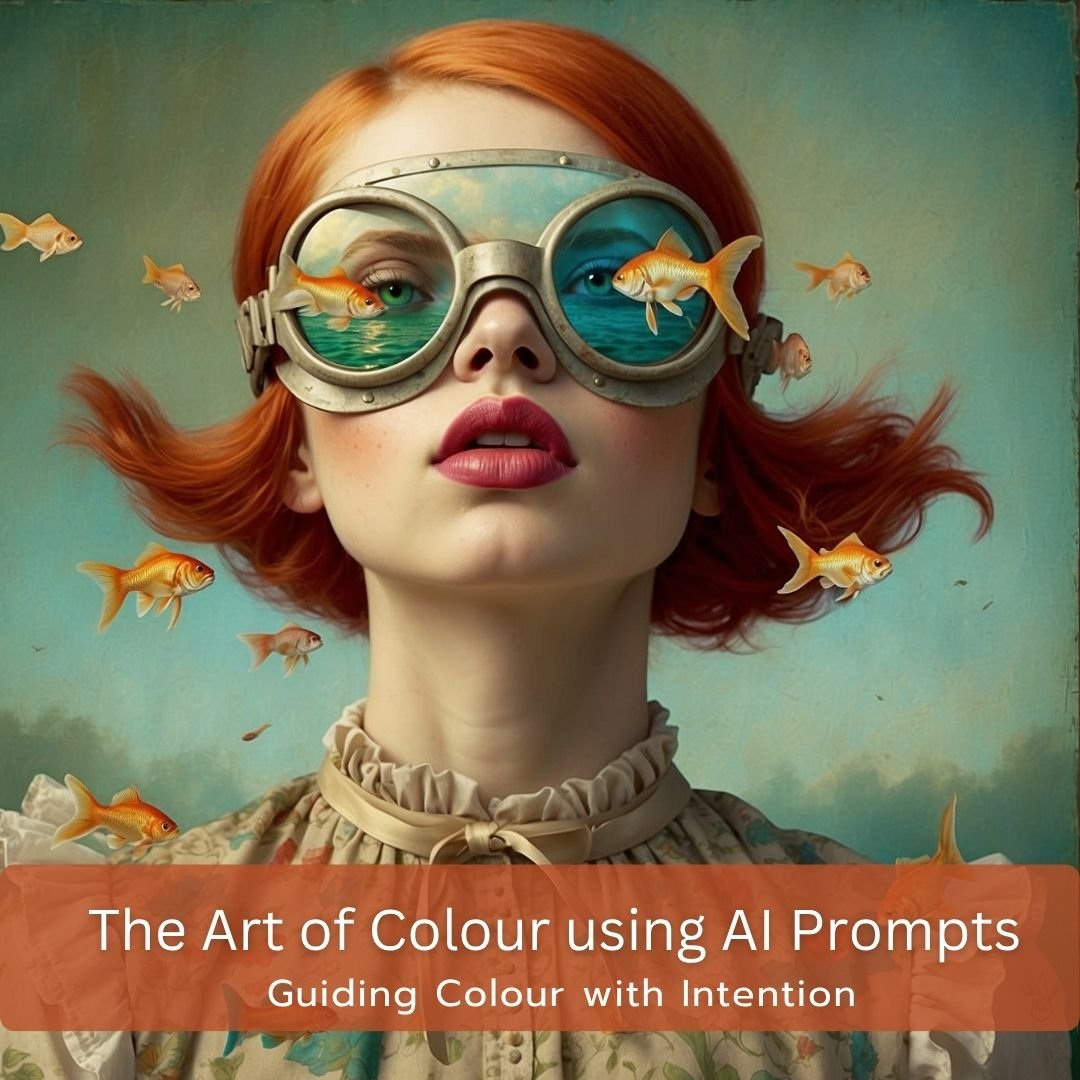
If you’re using AI to create images, colour shouldn’t be a guessing game.
Typing “soft pastels” or “moody tones” and hoping for the best often leads to inconsistent results. This guide shows you how to move beyond guesswork and start guiding colour with intention.
Inside this practical prompt library, you’ll find:
• Structured colour prompt examples across multiple styles
• Watercolour, metallic, muted, high-contrast and tonal variations
• Emotional and atmospheric phrasing that shapes mood
• Clear, adaptable language you can use immediately
• Insight into why the same colour words produce different outcomes
This isn’t about collecting colour adjectives.
It’s about understanding how AI responds to colour language — so your images feel cohesive, expressive and visually harmonious.
If colour matters in your creative process, this guide will give you more control and more confidence.
You might be interested in this:
If you’re using AI to create images, colour shouldn’t be a guessing game.
Typing “soft pastels” or “moody tones” and hoping for the best often leads to inconsistent results. This guide shows you how to move beyond guesswork and start guiding colour with intention.
Inside this practical prompt library, you’ll find:
• Structured colour prompt examples across multiple styles
• Watercolour, metallic, muted, high-contrast and tonal variations
• Emotional and atmospheric phrasing that shapes mood
• Clear, adaptable language you can use immediately
• Insight into why the same colour words produce different outcomes
This isn’t about collecting colour adjectives.
It’s about understanding how AI responds to colour language — so your images feel cohesive, expressive and visually harmonious.
If colour matters in your creative process, this guide will give you more control and more confidence.
You might be interested in this: