Scale and Tension in Digital Art: Creating Images That Tell a Story
If you enjoy exploring creativity, Photoshop and visual storytelling, you'll find more tutorials, articles and creative resources throughout my Learning Hub.
Have you ever looked at an image and found yourself staring at it a little longer, wondering what was happening? It might not be because of the colours or the editing. It might be because the image creates a question in your mind.
Two of the most effective ways to achieve this are scale and visual tension. They aren't Photoshop techniques or AI prompts. They're creative decisions that influence how people experience an image.
Once you begin to recognise them, you'll start seeing them everywhere—not just in surreal art, but in photography, illustration, advertising and film.
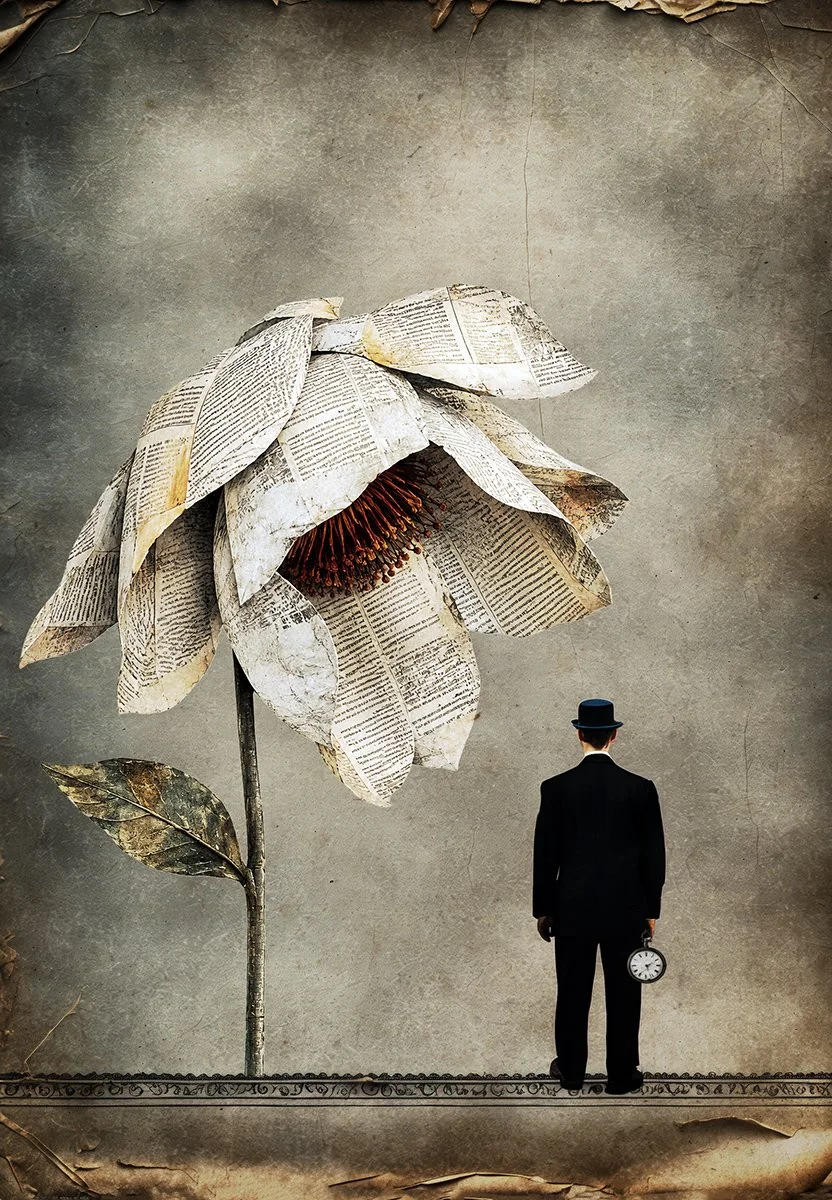
Time is ticking
What Is Scale?
Scale is simply the size relationship between objects within an image.
In everyday life we expect objects to have familiar proportions. A flower fits in our hand. A person is taller than a teacup. A tree is larger than a bird.
When we deliberately change those relationships, the meaning of the image changes.
“Time is ticking” ~ the flower has become impossibly large while the figure remains tiny.
The oversized flower immediately becomes more than a flower. It feels monumental, almost like a landscape or a world of its own. The tiny figure appears vulnerable, inviting us to wonder why they are there and what the clock might represent.
Nothing needs to be explained. Simply changing the scale encourages the viewer to invent their own story.
This idea has been used by surrealist artists for decades. By presenting familiar objects in unfamiliar proportions, they encourage us to look beyond what we expect and explore ideas rather than reality.
What Is Visual Tension?
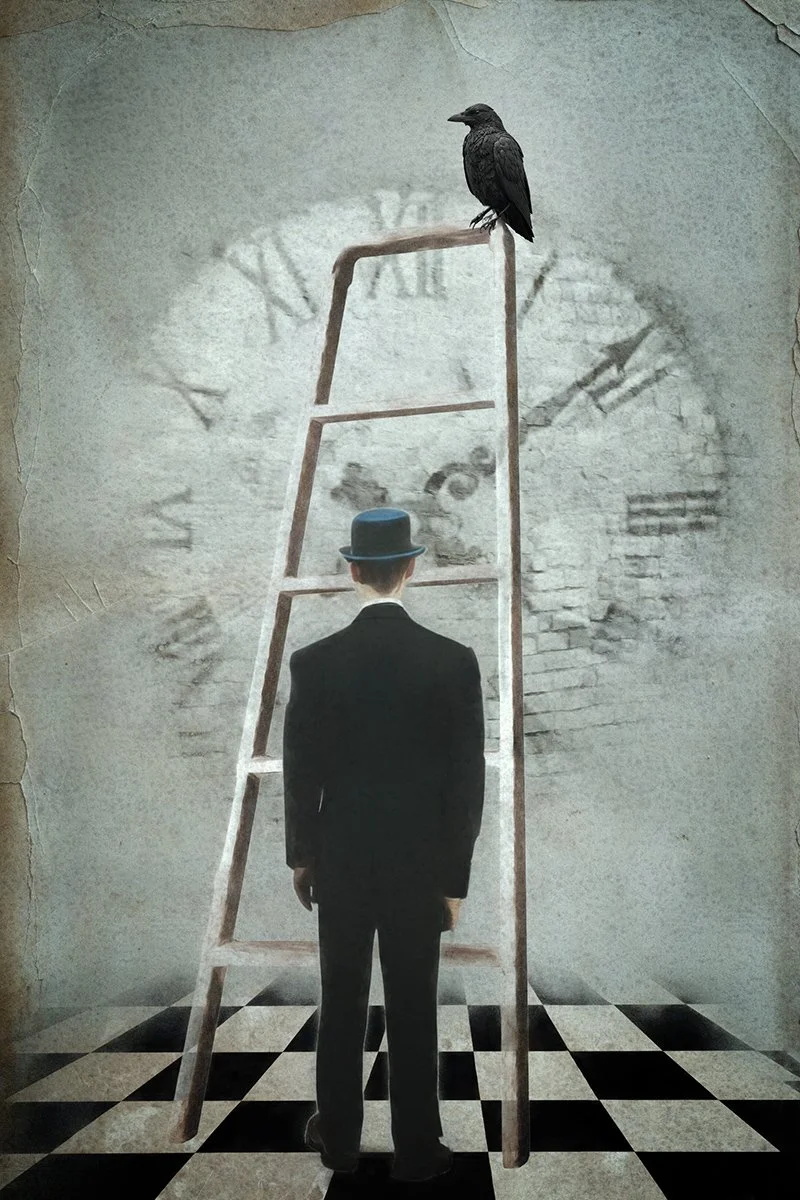
The Journey
Visual tension is a little different.
It isn't about conflict or drama. It's the feeling that something in the image is unresolved.
Perhaps two elements seem slightly out of place.
Maybe a subject is standing dangerously close to an edge.
Perhaps there's a vast empty space separating two objects.
These relationships create anticipation because our brains naturally try to complete the story.
“The Journey” ~ the figure appears balanced against an enormous form.
Nothing dramatic is happening, yet the image still feels alive because the relationship between the elements creates quiet tension.
The viewer begins asking questions rather than simply observing.
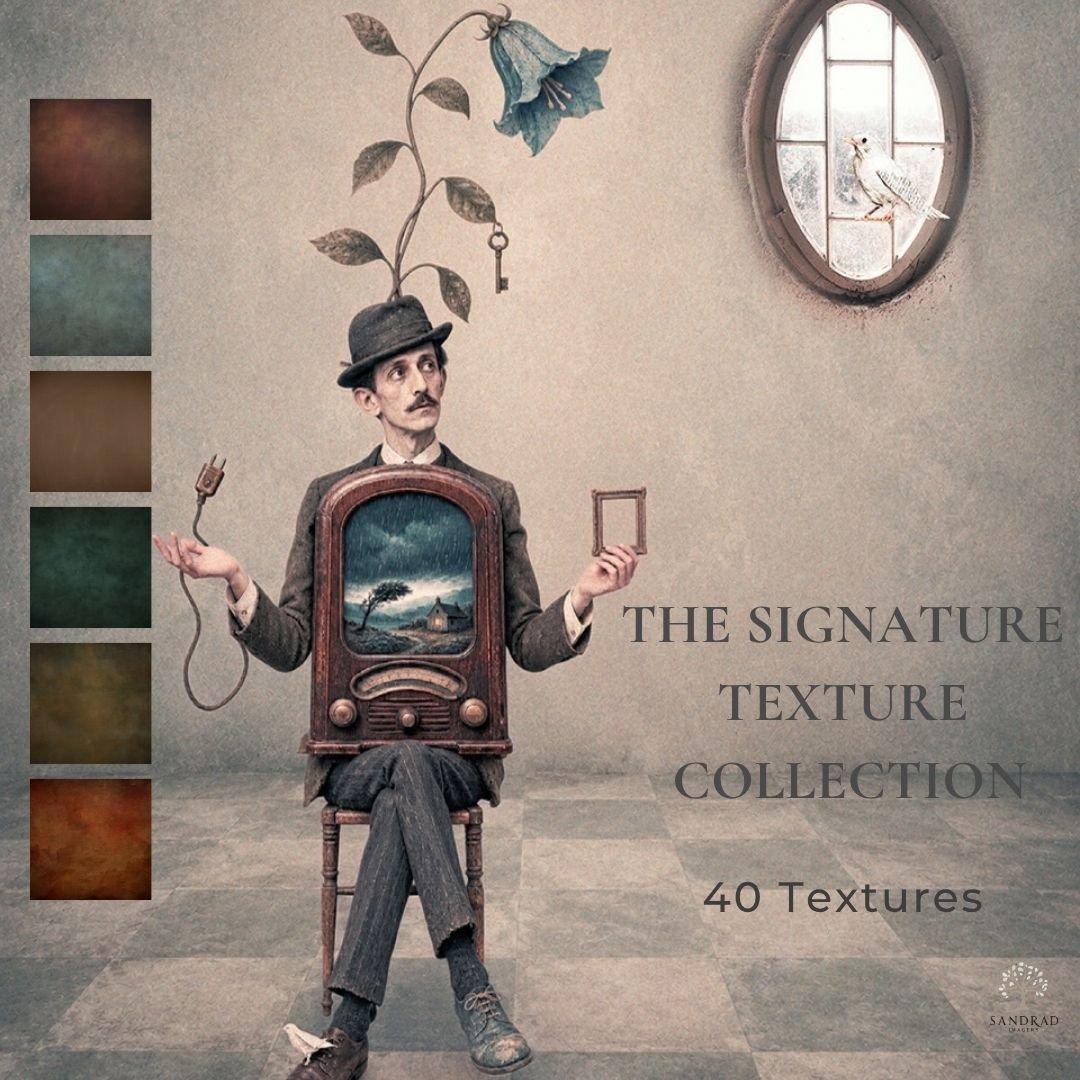
40 versatile textures for adding colour, atmosphere, depth and character to your creative work.
The Signature Texture Collection brings together 40 of my favourite textures in one versatile collection.
Created from my own photographic and handcrafted texture work, the collection includes a broad mix of soft painterly surfaces, subtle neutrals, earthy tones, rich colour, atmospheric textures and stronger distressed finishes.
Rather than every texture having the same look, this collection is designed to give you choice. Reach for something subtle when an image needs gentle depth, introduce colour and atmosphere, or use one of the stronger surfaces when your artwork needs more character.
Use them individually or experiment with blending modes, opacity, masks and combinations to make the effect entirely your own.
What’s Included
40 high-resolution JPEG textures
A varied mix of light, dark, warm, cool and neutral tones
Soft painterly, atmospheric and distressed surfaces
Suitable for digital art, photography and composite imagery
Files standardised to 4000 px on the longest edge
Instant digital download
Creative Uses
Use the textures to add atmosphere and depth, introduce or unify colour, soften areas of an image, build painterly character, create aged or distressed effects, or simply experiment with different finishing treatments.
They can be used in Photoshop and other image-editing software that supports JPEG files, layers and blending.
Instant Download
This is a digital product. No physical item will be shipped.
Your files will be available to download after purchase. Please download and save your files promptly, as download links may expire.
Terms of Use
Personal and commercial creative use permitted.
You may use these textures in your own finished artwork, composites, photography and client work.
The original texture files may not be resold, redistributed, shared, given away, extracted or claimed as your own. They must form part of your own creative work and must not be supplied in a way that allows the original files to be extracted or reused.
Single-user licence. Copyright remains with SandraD Imagery / Sandra Dann. Purchase does not transfer ownership of the original files.
Full Terms of Use are included with your download.
Refunds
Due to the digital nature of this product, purchases are non-refundable once downloaded, except where required under Australian Consumer Law.
Why Scale and Tension Work Together
On their own, these ideas are powerful.
Scale creates surprise.
Tension creates curiosity.
Together they encourage people to pause and spend more time exploring an image.
Instead of immediately understanding everything, viewers begin asking themselves:
Why is that object so large?
Why is the figure standing there?
What happens next?
Is there a hidden meaning?
There may not even be a single correct answer and that's perfectly fine.
Sometimes the most engaging images are the ones that leave room for imagination.
How These Ideas Influenced My Recent Work
Over the past few months I've been experimenting with paper collage. Interestingly, working with scissors, paper and texture changed the way I approached my digital artwork.
Rather than concentrating on creating realistic scenes, I found myself exploring relationships between shapes, scale and empty space. That playful experimentation naturally carried over into Photoshop.
The small figure that appears throughout my recent series became a way of exploring different ideas. Sometimes the figure appears insignificant beside an oversized object. Other times they seem suspended in a quiet moment where very little is happening yet the image still suggests a story.
I don't begin with a complete narrative in mind. Instead, I create enough visual clues for viewers to bring their own interpretation to the work.
Try It Yourself
The next time you're creating an image, challenge yourself with one simple question:
What happens if I change the size of just one object?
Or ask yourself:
Can I create curiosity without adding more elements?
Often the smallest creative decisions have the biggest impact.
Changing scale or introducing a little visual tension won't just alter the composition, it can completely change the story your image tells.
The next time you find yourself wondering why an image has captured your attention, look beyond the editing.
You may discover it's the relationship between the elements —the scale, the tension and the unanswered questions, that keeps you looking.
Continue Exploring
If you enjoyed this article, you might also like:
Find Your Style
◾How creative decisions shape your own visual voice.