Imagination Is Real. Even If You Can’t Hold It.
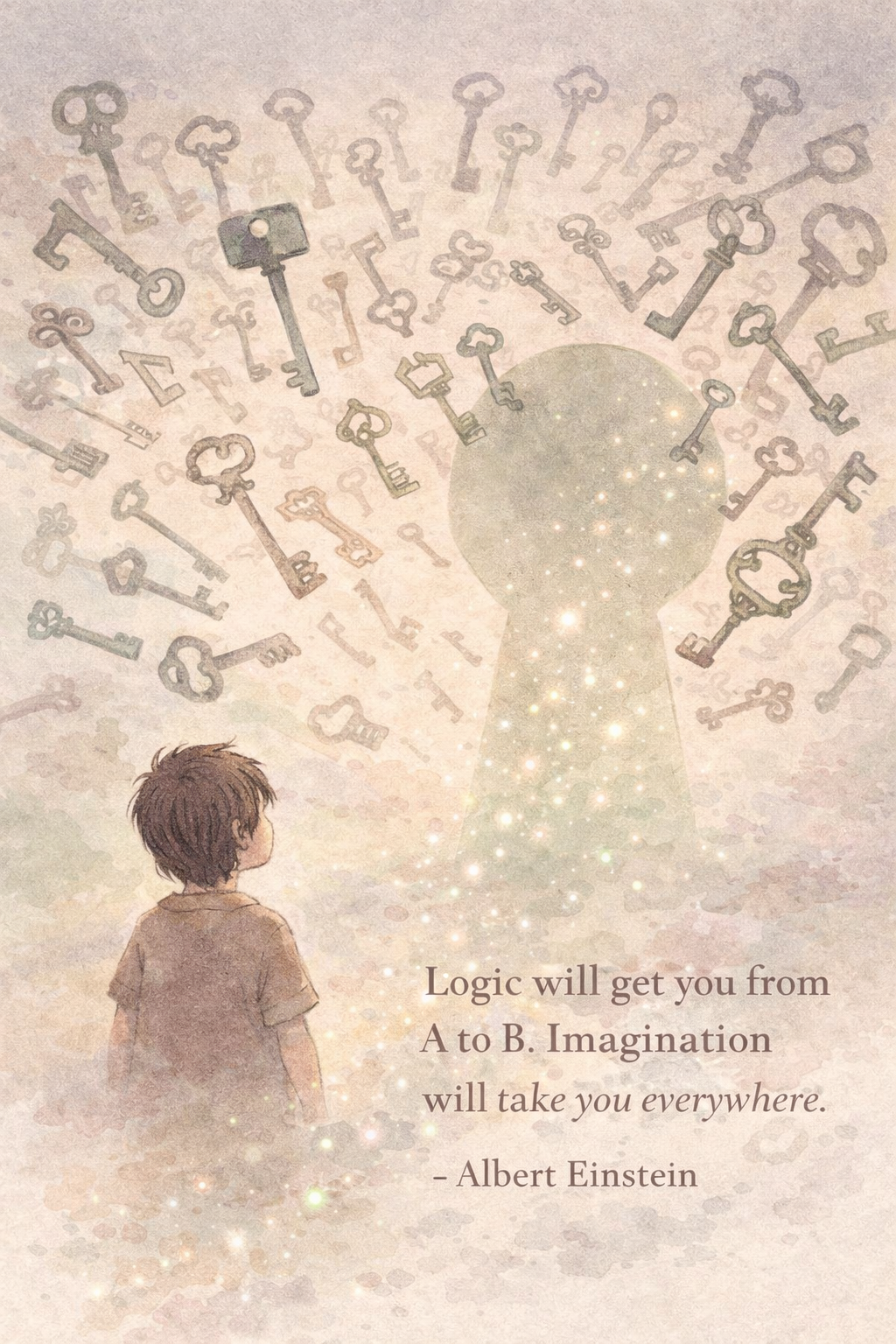
Logic gives us structure. It helps things make sense.
But imagination is where ideas begin
I had a conversation recently about imagination with another creative, and she said she feels a fraud sometimes — that her work isn't really her own. Then in the same week, when I did a presentation, someone felt the same way, though this time it came from somewhere different — from being told as a child to "stop dreaming" and "focus".
Yes. Imagination is real. It may not be tangible — you can't see it sitting on a shelf, you can't hold it in your hands. But it is one of the most powerful forces in human life. Every building you've ever walked into, every story you've ever loved, every solution to a problem that seemed impossible — all of it began as something invisible. An idea. A feeling. A 'what if?'.
That's imagination. And it has been with us since the beginning of time. Whatever tools we use to bring our ideas to life, the imagining — the dreaming, the deciding, the shaping — that part is always, unmistakably human.
We Know It’s Real — We Just Forget to Call It That
Think about the last time you worried about something that hadn’t happened yet. Or pictured how a room would look if you moved the furniture. Or lay awake replaying a conversation, imagining what you should have said.
That was imagination. Working quietly, without you even noticing.
We tend to think of imagination as something that belongs to artists and dreamers — to people who paint or write or make things. But imagination is far more ordinary and far more extraordinary than that. It is how we plan, how we empathise, how we hope. It is how we picture a better version of something and then work towards it.
Sometimes it only takes a single sentence — a line or a quote — to remind us how powerful imagination really is.
Colour Between the Lines — But Think Outside the Box

We learn the rules early—stay inside the lines. But creativity quietly asks us to step beyond them. Perhaps both have their place.
Here’s something that has always struck me as one of the great contradictions of modern life.
We hand children colouring books and teach them, from the very beginning, to stay between the lines. Neatness is praised. Straying outside the boundary is gently corrected. The message, absorbed early and absorbed deeply, is that there is a right way to do things — and your job is to stay within it.
And then those same children grow into adults. And we look at them across boardroom tables and say: ‘We need you to think outside the box.’
We spent years building the box. We reinforced every wall. And then we act surprised when people find it difficult to step outside it.
This isn’t a criticism of teachers or parents — structure matters, and learning to follow guidelines is a genuine skill. But somewhere in the balance between structure and freedom, imagination quietly lost its seat at the table. And most of us didn’t even notice it leave.
Where Imagination Is Welcomed and Where It Isn’t
Imagination isn’t treated equally across every area of life. In some spaces it is celebrated, nurtured, given room to breathe. In others it is quietly discouraged, seen as impractical, even a little suspect.
In the arts, imagination is the whole point. In technology and science, it drives innovation — every breakthrough began with someone imagining something that didn’t exist yet. In sport, coaches talk about visualisation as a serious performance tool. In therapy and psychology, imagination is used to heal.
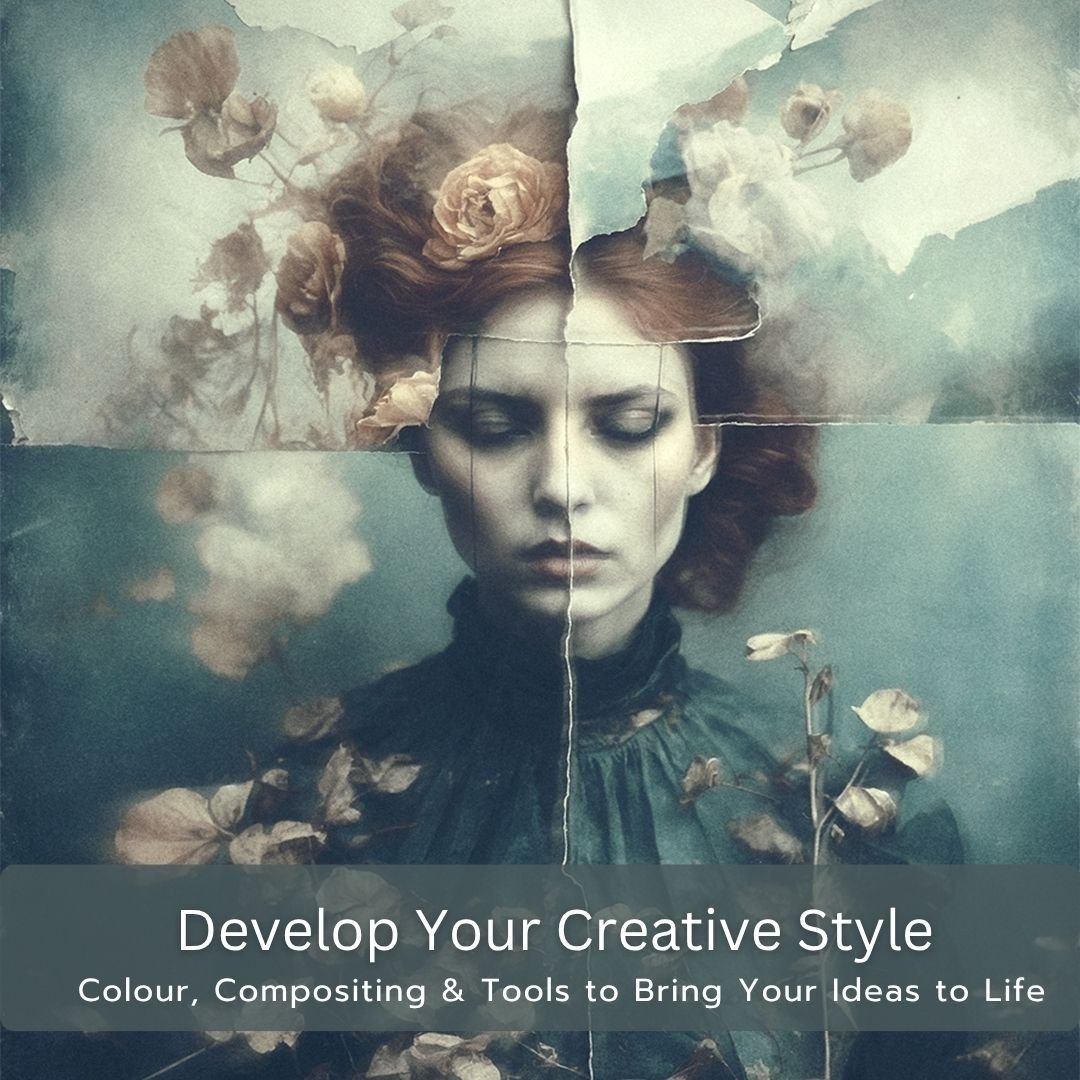
Exploring composite art, colour, and creativity in the age of AI
This ebook is a thoughtful guide for creatives who want to better understand why images work — not just how to edit them. Rather than focusing on software steps or presets, this guide focuses on the thinking behind composite art, colour choices, and creative decision-making.
Inside, you’ll explore:
The foundations of composite art and visual storytelling
How colour influences mood, meaning, and cohesion
Ways to develop stronger creative judgement and confidence
How to approach AI as a creative tool, not a replacement for vision
This ebook is not tied to any specific software and is designed to complement your existing workflow — whether you work in Photoshop, experiment with AI imagery, or combine both.
Ideal for creatives who want to slow down, think more intentionally, and build images with clarity and purpose.
And yet in so many everyday workplaces, in so many classrooms, in so many ordinary conversations, imagination is treated as the opposite of sensible. ‘Be realistic.’ ‘That’s not how things work.’ ‘Stay focused.’
We have created a world that says it values creativity while quietly hemming imagination in at every turn.
What Happens When We Stop Imagining
When imagination is suppressed for long enough, something shifts. We stop asking ‘what if’ and start only asking ‘what is’. We stop seeing possibilities and start only managing what’s in front of us. Life becomes smaller — not because the world got smaller, but because our ability to picture more of it quietly dimmed.
I hear it all the time. ‘I’m just not creative.’ ‘I don’t have that kind of imagination.’ ‘That’s for artistic people, not me.’
But here’s what I believe no one is born without imagination. It is as natural to us as breathing. What happens is that for many people, it simply hasn’t been fed. It hasn’t been given permission. It has been told, in a hundred small ways, to sit down and be quiet.
Giving Imagination Permission Again
The good news is that imagination doesn’t leave. It waits.
It is still there in the person who says they aren’t creative, firing quietly every time they picture their future, solve a problem or feel moved by something beautiful. It is still there in the adult who forgot how to play, who has simply never been handed the permission slip to start again.
What does that permission look like? It might be picking up a camera. It might be writing something just for yourself. It might be trying something with no expectation of doing it well — just doing it for the curiosity of it. It might be colouring outside the lines, quite literally, for the first time since you were five years old and nobody had told you not to yet.
You might also like:
Are the Rules Guiding Your Creativity or Limiting It?
Sandra Dann | SandraD Imagery | sandradimagery.com